

If you’re wondering how long it takes to receive inheritance money, the honest answer is: it depends on the estate, the probate process, and whether there are any delays such as taxes, debts, or disputes. In most cases, beneficiaries receive inheritance within 3 to 12 months, but complex estates can take longer.
This guide explains the full inheritance timeline, why delays happen, how probate affects payouts, and what you should do when you finally receive your inheritance.
What Is the Process of Receiving an Inheritance?
Receiving inheritance money is not usually instant. It goes through a legal process called probate, which ensures the deceased person’s debts are paid and assets are distributed correctly.
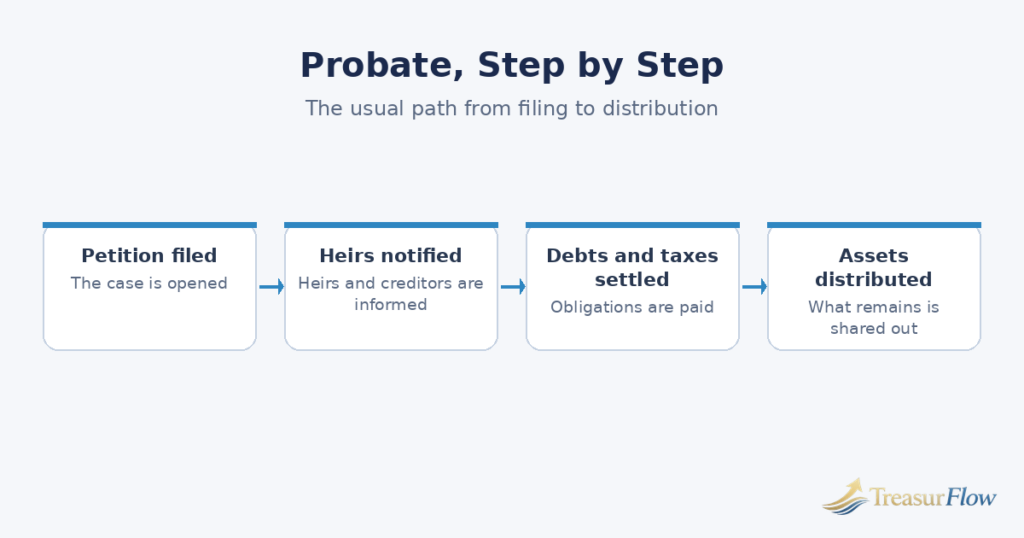
Here’s the basic process:
- The death certificate is issued
- The will is submitted to probate court
- An executor is appointed
- The estate is inventoried
- Debts and taxes are paid
- Remaining assets are distributed to beneficiaries
Only after these steps can inheritance money be released.
How Long Does It Take to Receive Inheritance Money?
On average:
- Simple estates: 3 to 6 months
- Moderate estates: 6 to 12 months
- Complex estates: 1 to 2+ years
The timeline depends on:
- Whether there is a valid will
- Court backlog (probate delays are common)
- Estate size and complexity
- Debts or unpaid taxes
- Family disputes
In short, inheritance is paid only after the estate is legally settled.
Why Is My Inheritance Taking So Long?
If your inheritance feels delayed, it is usually due to one or more of these reasons:
Probate Court Delays
Courts can take months just to validate a will and approve an executor.
Estate Debts
All outstanding debts must be paid before beneficiaries receive anything.
Property or Asset Sales
If the estate includes real estate, it may need to be sold first.
Family Disputes
Disagreements between beneficiaries can pause the entire process.
Missing Documents or Heirs
If anything is unclear, probate slows down significantly.
Delays are common and do not always mean something is wrong.
Can an Executor Delay or Control Your Inheritance?
Yes—but only within legal limits.
An executor is responsible for managing the estate, not withholding money for personal reasons. However, they may delay distribution due to:
- Court requirements
- Paying debts and taxes
- Selling estate assets
- Legal uncertainty
Warning signs to watch for:
- No communication for long periods
- Refusal to provide updates
- Unexplained delays after probate is complete
Beneficiaries may have legal rights if an executor is acting improperly.
Can You Receive Inheritance Before Probate Is Finished?
In most cases, no—but there are exceptions:
Partial distributions
Some estates allow early partial payments once debts are estimated.
Living trusts
If assets are in a trust, probate may be avoided entirely.
Small estate procedures
Some jurisdictions allow faster distribution for small estates.
Do You Pay Taxes on Inheritance Money?
In most cases, beneficiaries do not pay income tax on inheritance itself.
However:
Possible tax situations:
- Estate taxes (paid by the estate, not you)
- Inheritance taxes (only in certain states/countries)
- Capital gains tax (if you sell inherited assets later)
Important clarification:
- Inheritance is usually not considered taxable income
- But what you do with the money later may have tax consequences
Can You Deposit a Large Inheritance Check Into Your Bank Account?
Yes, you can deposit inheritance money into your bank account, even large amounts like $100,000 or more.
However, banks may:
- Ask for documentation (proof of inheritance)
- Report large deposits under financial regulations
- Temporarily hold funds for verification
Common concerns:
- Deposits above $10,000 may be flagged for reporting
- Cash deposits may require additional explanation
This is normal banking compliance, not suspicion of wrongdoing.
What Should You Do After Receiving an Inheritance?
Receiving inheritance money can be overwhelming. The best approach is to avoid rushing decisions. As part of reviewing your wider protection, compare best life insurance 2026.
Smart first steps:
- Pause before spending large amounts
- Pay off high-interest debt
- Build or strengthen your emergency fund
- Speak with a financial advisor
- Understand tax implications of any investments
Common mistake:
Many people spend too quickly and regret decisions later.
Common Mistakes When Receiving an Inheritance
Avoid these frequent errors:
- Spending too quickly
- Not understanding tax rules
- Ignoring estate documentation
- Failing to plan long-term
- Trusting unclear financial advice
- Not asking questions about delays
A thoughtful approach protects long-term wealth.
Can a Beneficiary Lose Their Inheritance?
Yes, in some cases:
- If debts exceed estate value
- If a will is successfully contested
- If legal documentation is invalid
- If the beneficiary is legally disqualified in rare cases
Most beneficiaries do receive their inheritance, but legal complications can affect timing or amounts. Older beneficiaries in particular should review best life insurance for seniors over 70 when planning what their own families will receive.
What Is the Shortest Time Probate Can Take?
In very simple cases, probate can take:
- As little as a few weeks to 3 months
This happens when:
- There is a clear will
- No disputes exist
- The estate has minimal assets
- No property needs to be sold
However, this is not the norm.
What Happens After Probate Is Completed?
Once probate ends:
- Debts are paid
- Assets are finalized
- Executors distribute funds
- Beneficiaries receive inheritance money
At this stage, payments are usually released relatively quickly.
Frequently Asked Questions
How fast do you get inheritance money?
Usually within 3 to 12 months, depending on estate complexity and probate speed.
Why is inheritance taking so long?
Common reasons include probate delays, debts, asset sales, or legal disputes.
Can an executor screw over a beneficiary?
Executors must follow the law. If they act improperly, they can be challenged legally.
Do beneficiaries pay taxes on inheritance?
Generally no, but estate taxes or capital gains may apply in certain cases.
Can I deposit a large inheritance check into my bank account?
Yes, but banks may require documentation for large deposits.
What should I do with a $500,000 inheritance?
Focus on debt reduction, savings, investing, and speaking with a financial advisor.
Final Thoughts
So, how long does it take to receive inheritance money?
In most cases, expect 3 to 12 months, but it can be shorter or significantly longer depending on probate, estate complexity, and legal factors.
Understanding the process helps reduce stress and prevents mistakes once the money arrives. If your inheritance is delayed, it’s often due to legal or administrative reasons—not necessarily wrongdoing.
If your situation is complex or delayed, speaking with a probate attorney or financial advisor can help you understand your rights and next steps.
📚 Sources & References
You can place this at the end of your article or before the author bio.
The information in this article is based on widely accepted legal, financial, and estate administration guidelines. For further reading and verification, you can refer to the following authoritative sources:
U.S. Courts – Understanding the Federal Court System (Probate context varies by state)
https://www.uscourts.gov/about-federal-courts/court-role-and-structure
Internal Revenue Service (IRS) – Estate and Gift Taxes
https://www.irs.gov/businesses/small-businesses-self-employed/estate-and-gift-taxes
USA.gov – Wills and Estate Planning Overview
https://www.usa.gov/wills
Consumer Financial Protection Bureau (CFPB) – Managing Money After Death
https://www.consumerfinance.gov/consumer-tools/dealing-with-the-loss-of-a-loved-one/
Nolo Legal Encyclopedia – Probate Process Explained
https://www.nolo.com/legal-encyclopedia/probate
Investopedia – Probate Definition & Process
https://www.investopedia.com/
How to Get Clear Updates While You Wait
The hardest part of waiting is often the silence, so build a simple habit of asking for updates in writing. The executor is usually your first point of contact; if an attorney is handling the estate, they may be the better person to ask. A short, polite message asking what stage the estate is at, what steps remain, and when the next update can be expected is usually enough. Keep a dated record of each reply, and save every letter or email about the estate in one folder.
Be patient with ordinary court timelines, but pay attention to warning signs. Long silence, repeated refusals to share updates, or unexplained delays after probate has closed are reasons to ask firmer questions, and possibly to consult a probate attorney for a one-off review. An attorney can explain whether the pace is normal for your jurisdiction and what remedies exist if an executor is not doing their job. You do not need to threaten anyone to get clarity – a clear written question, sent to the right person, usually moves things forward.
Planning Ahead While the Estate Is Still Being Settled
Do not spend money you have not yet received. Until probate closes, the amount and timing of your share can change if debts appear, assets sell for less than expected, or a dispute arises. Avoid borrowing against an expected inheritance or signing contracts that depend on it. Keeping your normal budget in place protects you if the payout takes longer than you hoped.
Use the waiting time to prepare rather than to speculate. List your debts, check your emergency fund, and write down what you would do with the money in broad terms – for example, clearing high-interest debt first, then saving – without locking yourself into specific purchases. Once the amount and timing are clearer, a single conversation with a financial advisor can turn that rough plan into something concrete. You will also be calmer when the money arrives, because you will already know your next step.
More Questions About Receiving Inheritance Money
Q: Can inheritance money be paid in instalments?
A: Sometimes. An executor may make partial distributions as assets are sold or debts are settled, with the remainder paid after probate closes.
Q: What documents should I keep after receiving inheritance money?
A: Keep the will or probate papers, the executor’s distribution statement, bank records, and any tax documents, so you can show where the money came from if a bank or tax authority asks.

Muhammad Zakir is the founder of Treasurflow and the author of its personal finance guides. He researches consumer banking, credit, and personal loans, and every guide cites primary sources such as the CFPB, FDIC, FTC, and IRS. His content is educational and is not personalized financial advice.
2 thoughts on “How Long Does It Take to Receive Inheritance Money? Why It May Be Delayed”