
Introduction
You’ve placed an order online. You’re excited. Then — nothing. No update. No tracking link that actually works. Just a vague “your order is on its way” message that tells you absolutely nothing.
That experience destroys trust fast.
Here’s the thing. The brands that avoid this problem aren’t just lucky. They’ve built visible supply chain fulfillment into how they operate at every level. They know where every shipment is, what’s about to go wrong and how to fix it before you even notice.
This article covers exactly which companies do this well, which industries depend on it most and what actually separates the leaders from everyone else. Whether you run a growing DTC brand or manage logistics for a mid-size manufacturer, there’s something here for you.
What Companies Use Visible Supply Chain Fulfillment and Why They Choose It
Amazon didn’t become America’s most trusted delivery brand by accident. Neither did Chewy, Nike or Walmart. What they share is a deep commitment to supply chain visibility — meaning they track every product, every shipment and every potential delay in real time.
Honestly, the “why” is simpler than most people expect. According to a 2023 project44 industry report, over 93% of U.S. consumers say delivery transparency directly impacts whether they buy from a brand again. That stat should stop any logistics manager in their tracks. Companies that invest in real-time fulfillment tracking protect revenue, reduce customer service costs and build the kind of loyalty money can’t easily buy. Those that don’t are essentially flying blind — and their customers feel it.
| Why Companies Choose Visibility | The Business Impact |
|---|---|
| Customer expectation | Higher repeat purchase rates |
| Revenue protection | Fewer refunds and chargebacks |
| Regulatory compliance | Audit-ready data for pharma and food |
| Investor and ESG pressure | Transparent reporting on supply chain ethics |
| Competitive edge | Faster, more reliable delivery than rivals |
Top Industries and Brands That Rely on Visible Supply Chain Fulfillment
Retail grabs the headlines, but supply chain visibility runs deep across multiple industries. In healthcare, companies like McKesson and Cardinal Health track temperature-sensitive pharmaceutical shipments down to the minute. A broken cold chain doesn’t just cost money. In that industry, it can cost lives.
Automotive is equally demanding. Ford and GM depend on visibility tools to monitor parts across dozens of supplier tiers simultaneously. Miss one component and an entire assembly line shuts down. Food and beverage giants like Tyson Foods and Nestlé monitor expiry windows and route adjustments at the same time. Then there’s consumer electronics — Apple’s U.S. distribution network uses supplier milestone tracking to ensure product launches hit store shelves on exactly the right day. None of this happens by chance. It’s all built on deliberate supply chain transparency embedded into every operational layer.
| Industry | Brand Example | Primary Visibility Use |
|---|---|---|
| Retail | Amazon | Last-mile delivery tracking |
| Healthcare | McKesson | Cold-chain compliance |
| Automotive | Ford | Multi-tier supplier parts tracking |
| Food & Beverage | Tyson Foods | Expiry and route monitoring |
| Consumer Electronics | Apple | Launch-day inventory precision |
| E-Commerce | Shopify merchants | Order-to-door fulfillment tracking |
How E-Commerce Companies Use Visible Supply Chain Fulfillment to Scale
E-commerce fulfillment is the most unforgiving logistics game running right now. The moment a customer clicks “buy,” a countdown starts. They expect speed, accuracy and a tracking link that updates in real time — not one that says “label created” for four straight days.
Here’s what most people miss. Scaling an e-commerce business without visibility doesn’t just create problems. It multiplies them. A brand moving from 500 to 5,000 orders a month adds warehouses, carriers and complexity at every step. Without order fulfillment services connected to real-time data, that complexity becomes chaos. Platforms like ShipBob, Flexport and Deliverr exist specifically because e-commerce supply chain management without visibility collapses under pressure. Brands that invest in this infrastructure early grow faster, lose fewer customers and spend less fighting fires they could have seen coming.
“E-commerce brands with real-time supply chain visibility see up to a 25% reduction in post-purchase cart abandonment.” — Flexport Industry Report, 2023
What Companies Use Visible Supply Chain Fulfillment to Reduce Shipping Delays
Delays are expensive. Not just in dollars refunded — but in trust burned. And trust, once lost, is genuinely hard to rebuild.
What Companies Use Visible Supply Chain Fulfillment Companies using visible supply chain fulfillment catch delays before they reach the customer. FedEx Insight, UPS Supply Chain Solutions and XPO Logistics all run proactive alert systems. The moment a shipment misses a scan, operations teams get flagged. That gives them time to reroute, communicate and recover — instead of scrambling to explain why a customer’s package hasn’t moved in three days. Think about Port of Los Angeles congestion at its worst. Brands without visibility had no idea which of their containers were stuck. Brands with supply chain visibility tools knew immediately — which shipments were affected, what was inside them and when alternatives could move. Proactive shipment alerts turn a potential crisis into a manageable inconvenience. That’s not a small difference. It’s the difference between retaining a customer and losing them permanently.
Retailers and 3PL Providers Using Visible Supply Chain Fulfillment Today
3PL providers are the backbone of American retail logistics. Nobody talks about this enough. Companies like Ryder, C.H. Robinson, Werner Enterprises and Echo Global Logistics move billions of dollars in goods every year — and today, retailers like Target and Costco require third-party logistics partners to come equipped with visibility tools as a contractual baseline. It’s not optional anymore.
Warehouse management transparency — knowing exactly what’s in a facility, where it’s staged and when it ships — gives retailers the confidence to rely on 3PLs at serious scale. The rise of 4PL models, where a single integrator manages multiple 3PL providers simultaneously, has made supply chain visibility even more essential. Without it, coordinating across multiple logistics partners becomes a guessing game where everyone loses. The brands that demand visibility from their partners aren’t being demanding for the sake of it. They’re protecting their customers.
How Mid-Market Brands Use Visible Supply Chain Fulfillment to Compete with Giants
This surprised me when I first looked at the data. Mid-market brands — those generating roughly $10M to $500M in annual revenue — are currently among the fastest adopters of supply chain fulfillment visibility tools in the entire U.S. market.
They can’t afford Amazon’s proprietary infrastructure.What Companies Use Visible Supply Chain Fulfillment But they absolutely can afford supply chain SaaS platforms like project44, FourKites and Shippabo. These tools give small to midsize businesses enterprise-grade visibility at a fraction of the cost of building custom systems. That’s a genuine equalizer. A mid-size apparel brand using FourKites can offer customers the same real-time tracking experience as a major national retailer — without building out a proprietary logistics network from scratch. Scalable fulfillment visibility is how the underdogs compete. And right now, many of them are winning.
What Companies Use Visible Supply Chain Fulfillment for Real-Time Order Tracking
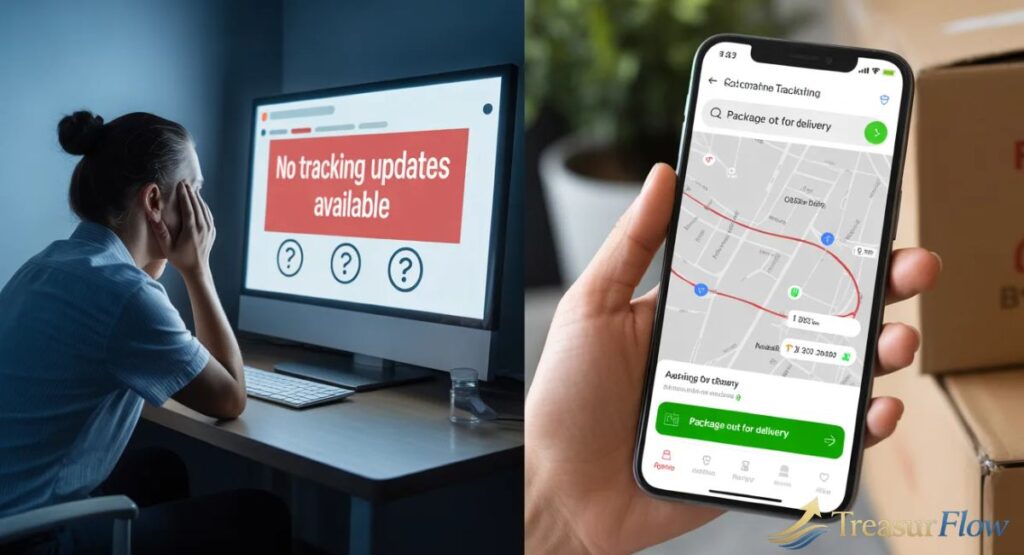
Real-time order tracking is where supply chain visibility stops being an internal operations tool and starts becoming a direct customer experience. Amazon, Chewy, Zappos and Apple have all built tracking experiences so smooth and reliable that customers expect the same from every brand they shop — including yours.
The technology stack making this possible is more complex than most realize. IoT-enabled supply chain systems weave together GPS carrier APIs, RFID warehouse scanning, IoT sensors on freight and branded customer-facing portals into one continuous flow of data. The result is measurable. According to project44’s 2023 benchmark data, companies using real-time tracking reduce WISMO — “Where Is My Order?” — customer service calls by up to 30%. What Companies Use Visible Supply Chain Fulfillment Every call you don’t receive is money saved and a customer interaction that stays positive.
| Tracking Technology | What It Does |
|---|---|
| GPS Carrier APIs | Live location updates from every carrier |
| RFID Warehouse Scanning | Instant inventory and dispatch confirmation |
| IoT Freight Sensors | Temperature, humidity and location data on freight |
| Branded Tracking Portals | Customer-facing post-purchase experience |
| Automated SMS/Email Alerts | Proactive updates before customers ask |
Case Studies: Companies That Transformed Operations with Visible Supply Chain Fulfillment
Real results prove more than any benchmark report. The companies below didn’t just buy visibility software. They rebuilt how they operate around it.
How Maersk and Other Global Brands Use Visible Supply Chain Fulfillment Networks
Maersk isn’t just a shipping line
Global logistics visibility operates on a fundamentally different scale than domestic tracking. Maersk’s network integrates ocean freight status, port congestion data, customs clearance milestones and last-mile delivery into one coherent picture. What Companies Use Visible Supply Chain Fulfillment Competitors like DHL Supply Chain, Kuehne+Nagel and DB Schenker offer comparable platforms. For U.S. companies importing from Asia or Latin America, this level of supply chain visibility means fewer customs surprises, better domestic inventory planning and fewer emergency air freight bills when sea shipments run late.
What Companies Use Visible Supply Chain Fulfillment to Improve Customer Experience
Here’s something most logistics articles don’t say plainly enough. Supply chain operations and customer experience are the same conversation now. Not separate departments. Not separate strategies. The same thing.
Companies that understand this use visible supply chain fulfillment as a direct CX instrument. Chewy sends personalized delivery notifications with the customer’s pet name in the subject line. Zappos proactively emails customers before they even realize a shipment is delayed. These aren’t just operational decisions — they’re brand decisions that build emotional loyalty. The data is blunt about this. According to Convey’s U.S. Consumer Research, 84% of American shoppers won’t return to a brand after a poor delivery experience. Post-purchase visibility — the tracking, communication and proactive updates that happen after checkout — is now a primary loyalty driver. Brands investing in it aren’t just moving packages. They’re keeping customers.
How to Choose a Visible Supply Chain Fulfillment Partner: What Leading Companies Look For
Choosing the right supply chain fulfillment partner is a strategic decision, not just a vendor selection. Leading U.S. companies approach it with a clear framework — and you should too.
Technology integration comes first. A partner’s platform must connect cleanly to your existing ERP, warehouse management systems and e-commerce stack via open APIs. Proprietary-only systems that don’t plug into your tech stack are a genuine red flag.What Companies Use Visible Supply Chain Fulfillment Carrier network breadth matters nearly as much. A visibility partner covering fewer than 300 carriers limits your routing flexibility in ways that will cost you during peak seasons.
Companies including Pro Star Logistics, ABS Packaging, Parcel Partners and KCX Trade Global TriCon have built strong reputations by offering transparent, real-time fulfillment network data to their clients. Regional specialists like Salt Lake City fulfillment provider IntegraCore Fulfillment and PC Synergy PostalMate serve small to midsize businesses with boutique visibility capabilities that larger platforms sometimes overlook. Before signing anything, demand a live demo of the tracking dashboard. Ask specifically about data refresh rates. Test the proactive alert system under real conditions. A partner who can’t demonstrate their visibility tools confidently probably can’t deliver them reliably.
| Evaluation Criteria | What to Look For | Red Flag |
|---|---|---|
| API Integration | Compatible with ERP, WMS and e-commerce systems | Proprietary-only, closed system |
| Carrier Coverage | 500+ carrier integrations | Regional-only coverage |
| Data Refresh Rate | Sub-60 second real-time updates | Hourly or daily batch processing |
| Customer Tracking Portal | Branded, white-label experience | Generic carrier redirect |
| Scalability | Grows with order volume | Fixed pricing tiers that cap growth |
| Account Management | Dedicated, proactive communication | Ticket-only support model |
Beyond technology, cultural fit matters more than most companies openly admit. What Companies Use Visible Supply Chain Fulfillment A fulfillment partner that shares data openly, communicates proactively and treats your problems as their own problems is worth far more than a technically superior platform with poor account management. The best third-party logistics relationships in the U.S. are built on mutual accountability — not just contract terms.
Real-World Use of Visible Supply Chain Fulfillment (Companies, Tracking & Systems)
Visible supply chain fulfillment is not just a concept used in logistics theory — it is actively used by real companies that depend on fast, accurate, and transparent order movement across warehouses, carriers, and delivery networks.
This system is widely adopted across industries where real-time visibility and coordination directly impact customer satisfaction and operational efficiency.
What Companies Use Visible Supply Chain Fulfillment?
Visible supply chain fulfillment systems are commonly used by businesses that manage high-volume or time-sensitive logistics operations.
These include:
- E-commerce companies (Shopify, Amazon sellers, DTC brands)
- 3PL (third-party logistics) providers
- Retail chains with multi-warehouse distribution
- Subscription-based product companies
- Global shipping and freight companies
These companies rely on fulfillment visibility systems to reduce delays, improve inventory accuracy, and provide real-time order tracking to clients and customers.
Without visibility, these businesses face miscommunication between warehouses, delayed shipments, and inventory mismatches.
What Is Visible Supply Chain Tracking?
Visible supply chain tracking refers to the ability to monitor every stage of an order’s journey in real time — not just shipping, but the entire fulfillment process.
This includes:
- Order confirmation and entry into the system
- Inventory allocation inside warehouse
- Picking and packing progress
- Carrier handoff and dispatch
- Final delivery confirmation
Unlike traditional tracking systems that only show shipping updates, visible supply chain tracking provides full operational transparency from warehouse to delivery.
This helps businesses and customers understand exactly where an order is at any moment.
What Is a Visible Supply Chain Warehouse?
A visible supply chain warehouse is a logistics facility that uses real-time data systems to track inventory movement and order processing inside the warehouse.
In this type of warehouse:
- Inventory updates automatically in real time
- Orders are tracked from entry to dispatch
- Clients can view fulfillment progress live
- Errors are detected before shipment leaves the facility
This improves efficiency, reduces manual reporting, and increases accuracy in fulfillment operations.
What Is Supply Chain Visibility?
Supply chain visibility refers to the ability to see and track the movement of goods, data, and processes across the entire supply chain network.
It includes:
- Supplier and inventory tracking
- Warehouse operations monitoring
- Transportation and shipping updates
- Final delivery tracking
High supply chain visibility helps companies reduce delays, improve forecasting, and increase customer satisfaction by eliminating uncertainty in operations.
End-to-End Visibility in Supply Chain
End-to-end visibility means tracking a product from the moment it enters the supply chain until it reaches the final customer.
It covers:
- Supplier input and inventory arrival
- Warehouse processing and storage
- Order picking and packing
- Carrier shipping and delivery stages
This level of visibility ensures that businesses and customers always know the exact status of an order, reducing confusion and improving trust.
What Does Visible Supply Chain T1 Mean?
Visible supply chain T1 refers to Tier 1 logistics and supplier networks — the primary hubs responsible for major distribution flows.
T1 visibility allows companies to:
- Monitor primary warehouse and distribution centers
- Track high-priority supplier shipments
- Manage large-scale logistics operations in real time
In systems like USPS or large logistics networks, T1 visibility ensures that delays at the core distribution level are detected early before they impact the entire supply chain.
Visible Supply Chain Management Explained
Visible supply chain management is the use of integrated systems that provide full transparency across procurement, warehousing, fulfillment, and delivery.
It combines:
- Warehouse Management Systems (WMS)
- Transportation Management Systems (TMS)
- Order Management Systems (OMS)
- Real-time tracking dashboards
The goal is to eliminate blind spots in the supply chain and ensure every stakeholder has access to accurate, real-time operational data.
Visible Supply Chain Package Tracking
Visible supply chain package tracking allows both businesses and customers to monitor packages beyond traditional courier tracking.
Instead of only seeing “shipped” or “out for delivery,” users can view:
- Warehouse processing status
- Packaging confirmation
- Carrier handoff timing
- Live delivery progress
This creates a more transparent and reliable delivery experience for both businesses and customers.
Visible Supply Chain Fulfillment Tracking
Visible supply chain fulfillment tracking focuses specifically on tracking the internal fulfillment process before shipment.
It shows:
- Order processing status inside warehouse
- Inventory allocation confirmation
- Packing and dispatch status
- Real-time exception alerts if delays occur
This helps businesses identify issues early and improve operational efficiency.
Conclusion
Visible Supply Chain Management has moved from competitive advantage to operational necessity. The brands winning in today’s U.S. market — from Maersk and Walmart at the top to agile mid-market operators and small to midsize businesses building fast — share one operating philosophy. You can’t manage what you can’t see.
Whether you run an e-commerce supply chain shipping 500 orders a month or a multi-node fulfillment network processing millions, the tools exist right now to give you full visibility. The question isn’t whether you can afford visible supply chain fulfillment. The real question is whether you can keep competing without it.
Audit your current setup. Find your blind spots. Close them before your competitors do.

About the Author: Muhammad Zakir
Financial Researcher & Content Strategist specializing in consumer credit protection, fee transparency, and personal finance literacy.