

There is a version of this article that would open with a definition of what a DSCR loan is, followed by five bullet points and a disclaimer to speak to a financial advisor. You have read that article before. It did not help you.
This one is different. Every question in here came from a real person typing into a search bar — or asking an AI assistant — because they needed a straight answer and could not find one. Some of these people are 70-year-old women wondering if a bank will even take their call. Some are landlords with twelve rental properties who got denied a conventional loan last year because their W-2 was the wrong number. Some are adult children trying to figure out if they can legally give their kid $100,000 without the IRS arriving at the door.
If any of that sounds like you, keep reading. We will cover everything.
DSCR Loans in 2026 — Rates, Speed, Downsides, and Alternatives
What Are the DSCR Rates for 2026?
As of mid-2026, DSCR loan rates are sitting in the range of 7.25% to 8.75% for most borrowers, depending on credit score, loan-to-value ratio, property type, and lender. The spread is wide because DSCR is a non-QM (non-qualified mortgage) product — lenders price it based on individual risk, not a government-backed benchmark.
Here is a rough breakdown of where rates fall by borrower profile:
Strong profile (700+ credit, 75% LTV or lower, DSCR of 1.25 or above): 7.25%–7.75%
Average profile (660–699 credit, 80% LTV, DSCR of 1.0–1.24): 7.75%–8.25%
Thinner profile (below 660 credit, higher LTV, DSCR near 1.0): 8.25%–8.75%+
Short-term rental properties — Airbnb, Vrbo — often carry a 0.25% to 0.5% premium over standard DSCR rates because lenders view vacancy risk differently. If you are financing a furnished rental, factor that in.
One thing worth knowing: DSCR rates move faster than conventional rates. When the Federal Reserve signals a shift, DSCR lenders reprice within days, not weeks. Check rates monthly, not quarterly.
What Is the Downside to a DSCR Loan?
Nobody asks this question because they want to be talked out of a DSCR loan. They ask it because they are smart enough to want the full picture before they sign anything. Here it is, plainly.
The rate is higher than a conventional mortgage. There is no way around this. You are paying for the flexibility of qualifying without W-2 income. On a $400,000 loan, an extra 1.5% in rate costs you roughly $375 per month. That math matters.
You typically need 20% to 25% down. DSCR lenders rarely go below 75% LTV on investment properties. If your down payment plan depends on 10% or 15% down, you are looking at the wrong product.
The property has to carry itself. The entire premise is that the rental income covers the mortgage. If you buy in a soft rental market, or your tenants leave, and the income drops below the debt service, you own a problem. The loan does not care what happened — the payment stays the same.
Prepayment penalties are common. Most DSCR loans include a step-down prepayment penalty — often 5-4-3-2-1 over five years. If you plan to refinance or sell within a few years, read this clause carefully and negotiate it before closing, not after.
There is less lender competition. Conventional mortgages have hundreds of lenders fighting for your business. DSCR has a smaller pool. That means less price pressure and less room to shop aggressively.
None of this disqualifies DSCR for the right investor. But walking in with clear eyes is better than being surprised at the closing table.
What Is the DSCR Loan Prepayment Penalty — Explained
A prepayment penalty means the lender charges you a fee if you pay off the loan early — either through refinancing, selling, or making extra principal payments beyond what is allowed.
On a DSCR loan, the most common structure is a step-down penalty:
- Year 1: 5% of the outstanding balance
- Year 2: 4%
- Year 3: 3%
- Year 4: 2%
- Year 5: 1%
- Year 6 and beyond: nothing
On a $350,000 loan balance, a Year 2 payoff would cost you $14,000 in fees. That is a real number and a real hit to your return.
Some lenders offer softer terms — 3-2-1 over three years — and a few will negotiate prepayment terms entirely if your profile is strong enough. Ask for it. The worst they can say is no.
Do DSCR Loans Close Faster?
Yes, often significantly faster. Here is the honest comparison.
A conventional mortgage typically closes in 30 to 45 days. Sometimes longer if the underwriting queue is backed up or your tax returns require additional verification.
A DSCR loan typically closes in 14 to 21 days with an experienced lender. The reason is simple: there is far less documentation. No tax return analysis, no income verification through a CPA, no employment history review. The lender looks at the property’s rental income, runs the DSCR calculation, reviews the appraisal, and makes a decision.
For investors moving quickly in competitive markets — especially where sellers want certainty and speed — the faster close is a genuine competitive advantage, not just a nice-to-have.
What Are the Alternatives to DSCR Loans?
DSCR is not the only non-W2-friendly option in real estate finance. Here is what else exists and when each one makes sense.
Bank Statement Loans — Instead of tax returns, you qualify based on 12 to 24 months of personal or business bank deposits. Good for self-employed borrowers with strong cash flow that does not show up cleanly on a return. Rates are similar to DSCR.
Asset Depletion Loans — The lender divides your liquid assets by the loan term and treats the result as monthly income. A retired investor with $2 million in a brokerage account could qualify for a substantial mortgage without any income at all. Excellent for older, asset-rich borrowers.
Hard Money Loans — Short-term, high-rate loans (9%–14%) typically used for fix-and-flip projects. Not a long-term hold strategy, but extremely fast to close and highly flexible on qualification.
Commercial Loans — If you own five or more units, some lenders shift you into commercial lending, which uses different underwriting entirely. Income is still king, but it is the building’s income, not yours.
Portfolio Loans — Some smaller banks and credit unions keep loans in-house rather than selling them to secondary markets. That gives them freedom to underwrite creatively. Worth a conversation if you have an existing banking relationship.
Home Equity Line of Credit (HELOC) — If you have equity in a primary residence, a HELOC can fund a down payment or a full purchase on a lower-priced property. Not a mortgage replacement, but a useful tool alongside one.
Each of these has a specific use case. DSCR is not superior to all of them — it is just the cleanest option for cash-flowing rental properties when you do not want to hand over three years of tax returns.
What Happened With My DSCR Loan Denial — and What to Do Next
Getting denied on a DSCR loan is frustrating, but the reason is almost always one of a small set of things, and most of them are fixable.
The DSCR ratio was too low. Lenders typically want a ratio of 1.0 or higher — meaning the rent at least covers the mortgage payment. If you were at 0.85 or 0.9, you either need a larger down payment to reduce the monthly debt service, or a property in a higher-rent market.
The credit score did not meet the minimum. Most DSCR lenders require at least 620 to 640. Some want 680 or higher for better rates. If you are below the threshold, six months of disciplined credit repair — paying down balances, disputing any errors — can move the number meaningfully.
The property type was flagged. Rural properties, condotels, properties with fewer than 600 square feet, or properties in markets the lender does not serve can trigger automatic declines that have nothing to do with you.
The appraisal came in low. If the appraised value was below the purchase price, the LTV ratio blows up and the deal falls apart. You can order a second appraisal, negotiate the purchase price down, or bring more cash to the table.
The action is the same in all cases: get the denial letter in writing, identify the specific reason, and ask the lender what would need to change for them to approve it. Most are willing to have that conversation. Then either fix the issue or find a lender whose guidelines fit your situation.
Mortgage Qualification — Income, Salary, and the Big Number Questions
How Much Income Do You Need to Qualify for a $500,000 Mortgage?
This is the question everyone Googles but nobody gives a clean answer to, so here is one.
For a conventional loan at 7% interest on a $500,000 mortgage with 20% down (so a $400,000 loan balance), your monthly principal and interest payment is roughly $2,661. Add property taxes, insurance, and HOA if applicable, and the total housing cost is probably $3,200 to $3,600 per month.
Most conventional lenders want your total housing cost to stay below 28% of your gross monthly income, and your total debt (housing plus car, student loans, credit cards) to stay below 43%.
Using the 28% rule: $3,400 ÷ 0.28 = approximately $12,143 per month gross income required. That is roughly $145,700 per year.
Using the 43% total debt rule, if you carry other monthly debt obligations, the required income goes up.
Now here is the important wrinkle: if you are buying as an investor and plan to rent the property, a DSCR loan bypasses the income calculation entirely. The question becomes whether the rent covers the mortgage — not whether your salary does.
Can I Afford a $400K House on a $100K Salary?
Technically, yes — though you will be at the edge of what most conventional lenders want to see.
At $100,000 annual gross income, your monthly gross is $8,333. The 28% housing rule puts your maximum comfortable housing payment at around $2,333 per month.
A $400,000 home with 20% down ($80,000) leaves a $320,000 mortgage. At 7%, that is a monthly payment of roughly $2,129 in principal and interest. Add taxes, insurance, and maintenance and you are likely at $2,600 to $2,900 per month — above the comfortable threshold, though lenders may still approve it depending on your debt profile.
The honest answer is: you can qualify, but it may feel tight month to month. The safer play is to increase the down payment, wait until rates drop, or look at homes priced around $350,000.
Can I Afford a $500K House With a $100K Salary?
This is harder. At $100,000 income, a $500,000 home with 20% down puts a $400,000 mortgage on your plate — roughly $2,661 per month in P&I. With taxes and insurance, that figure climbs toward $3,200 to $3,500 per month. The 28% rule would ideally put your housing budget at $2,333. You are 30% to 50% above that.
Conventional lenders will likely push back. You could still qualify if you have zero other debt, excellent credit, and a lender willing to stretch to a 43% total DTI — but it will not be comfortable.
The more interesting question is: what if the $500,000 property generates rental income? As an investment, if it earns $4,000 a month in rent, a DSCR loan evaluates it on those numbers, not your salary. That changes everything.
What Salary Do You Need for a $400,000 Mortgage?
A $400,000 mortgage at 7% over 30 years costs approximately $2,661 per month in P&I. With taxes and insurance added, plan for $3,100 to $3,400 total monthly housing cost.
Using the 28% rule: you need around $11,070 to $12,143 per month in gross income, or roughly $133,000 to $146,000 annually, to qualify comfortably.
That said, lenders have flexibility. A 43% DTI ceiling means that if you have no other debts at all, some lenders will approve a $400,000 mortgage at lower income levels. The rate you receive will reflect the tighter qualification.
Age and Mortgages — What 60, 70, and 80-Year-Old Borrowers Need to Know
Can a 70-Year-Old Woman Get a 30-Year Mortgage?
Yes. Absolutely. This is not a gray area.
The Equal Credit Opportunity Act prohibits lenders from denying credit based on age. It is federal law. A lender who turns you down because you are 70 is breaking the law.
What lenders can consider is your income, your assets, your credit history, and your ability to repay the loan — the same criteria applied to any borrower. If a 70-year-old woman has a pension, Social Security income, rental income, or substantial assets, she qualifies on those merits.
Now for the practical reality that the law does not cover: a 30-year mortgage means the loan matures when you are 100. Some lenders are privately hesitant about this, not because of discrimination, but because of estate and probate considerations. The solution is to either work with a lender who specializes in senior borrowers, use an asset depletion loan, or consider a 15-year term if your income supports the higher payment.
What Lenders Lend Up to Age 80?
Most mortgage lenders will technically lend to borrowers of any age, because the law requires it. But the lenders who actively welcome and specialize in older borrowers are a more specific group.
Credit unions tend to be more flexible and relationship-oriented than large banks. They often have more latitude in underwriting and a culture of working with members rather than running them through an automated system.
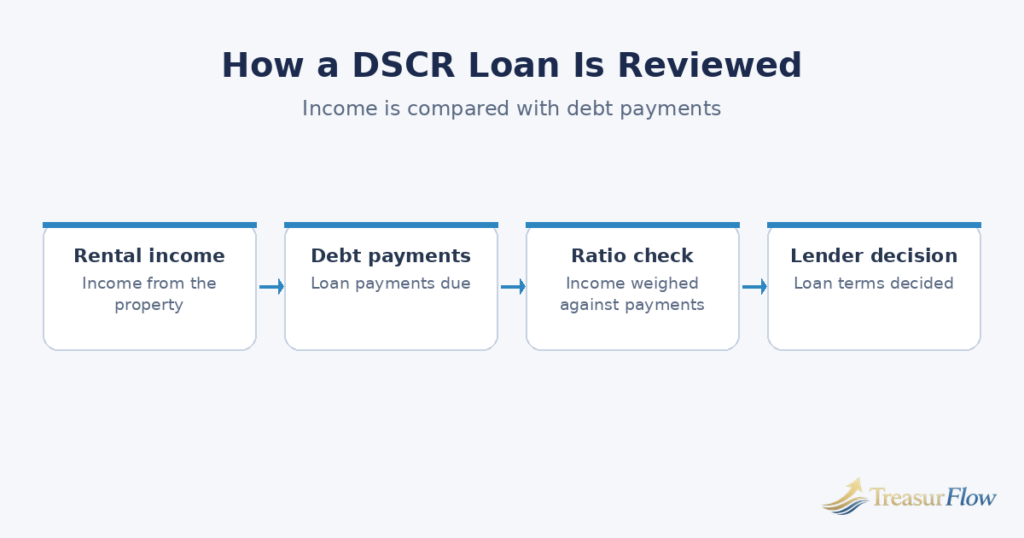
DSCR lenders, specifically, have no maximum age restriction because the loan is not qualified on personal income at all. If the rental property produces income, the age of the borrower is largely irrelevant to the approval.
Portfolio lenders — those who keep loans on their own books rather than selling them — also have more flexibility since they are not constrained by secondary market guidelines.
If you are 75 or 80 and exploring mortgage financing, lead with asset-based qualification and DSCR products. Those are your strongest paths.
Is It Wise to Buy a House at Age 70?
That depends on what “wise” means to you — and whether this is about a home to live in or a property to invest in.
For a primary residence, the questions worth thinking through honestly: How long do you plan to stay? Does ownership make sense versus renting when you factor in maintenance, property taxes, and capital tied up in equity? What happens to the property in your estate plan?
In many cases, buying at 70 is entirely sensible. You may be healthier and more active than any previous generation of 70-year-olds. You may plan to live in the home for 20 or 25 years. You may have grandchildren who will inherit it. None of that makes a mortgage automatically wrong.
The financial case for buying at 70 is strongest when you have the liquidity to absorb costs without stretching, the property fits your lifestyle for the long term, and you are not taking on a mortgage so large that it threatens your monthly cash flow.
For investment properties at 70, the calculus is different and often more favorable — especially with a DSCR loan, where the property’s income carries the debt and your personal income picture is secondary.
Family Loans, Gift Money, and the Tax Questions No One Explains Clearly
What Is the $100,000 Loophole for Family Loans?
This refers to IRS rules around below-market interest loans between family members. When you lend money to a family member at a rate below the Applicable Federal Rate (the AFR, which is published monthly by the IRS), the IRS treats it as if you charged the proper rate and gifted the difference back to the borrower.
However, there is a specific exemption: if the total outstanding loans between you and the borrower stay below $10,000, the below-market rules do not apply at all. And for loans between $10,001 and $100,000, the imputed interest rules are limited — you are only required to impute interest up to the borrower’s net investment income for the year.
In plain English: if you lend your son or daughter $100,000 at 0% interest and their net investment income for the year is low (say, under $1,000), the IRS cannot impute much taxable interest income to you.
This is a legal strategy. It is not a secret. But it requires careful documentation — a written promissory note, payment records, and ideally a conversation with a CPA before you transfer anything.
Can I Give My Son a Gift of $100,000 Without Paying Any Taxes?
In 2026, the annual gift tax exclusion is $18,000 per recipient. If you give your son more than $18,000 in a calendar year, you are required to file a gift tax return (IRS Form 709) for the amount above the exclusion.
Here is the part most people miss: filing a gift tax return does not mean you pay tax. It means you draw down your lifetime gift and estate tax exemption, which in 2026 remains in the range of $13 million per individual. Unless your total lifetime gifts exceed that threshold, no actual tax is owed.
So yes — you can give your son $100,000. You will file a Form 709. You will report approximately $82,000 as exceeding the annual exclusion. That $82,000 reduces your lifetime exemption. But if your estate is well below $13 million, you will pay zero tax on it.
One important note: consult a CPA or estate attorney before any large transfer. State gift tax rules vary, and the federal lifetime exemption is subject to change.
Can I Transfer $100,000 to My Daughter?
The answer is the same as above — yes, and the process is straightforward. You can wire the funds directly to her bank account, write a check, or transfer assets of equivalent value.
The difference between a gift and a loan matters enormously for tax and legal purposes. A gift is permanent — no repayment expected. A loan is contractual — document it with a promissory note and charge at least the AFR interest, or navigate the below-market rules described above.
If this money is intended to help your daughter buy a home, her mortgage lender will ask for a gift letter confirming the money does not need to be repaid. That letter is standard and your lender will provide the template.
Interest Rates — Where Are We, Where Are We Going
Will Interest Rates Drop to 3% Again?
The short answer: almost certainly not anytime soon, and probably not in this decade. That is not pessimism — it is what the underlying data shows.
The 3% rates of 2020 and 2021 were an extraordinary intervention by the Federal Reserve during a global economic shock. The Fed purchased trillions in mortgage-backed securities specifically to suppress rates and support the economy through the pandemic. That window closed, and the structural conditions that created it are gone.
For rates to return to 3%, the U.S. would need either another economic emergency on the scale of 2020, or a sustained deflationary environment that would itself be a serious problem for the economy.
What is more realistic over the next several years is a gradual decline toward 5.5% to 6.5% as the Fed continues normalizing policy — assuming inflation stays contained and the economy does not overheat again. That is meaningful relief from current levels, but it is not 3%.
If you are waiting for 3% before you buy, you are likely waiting indefinitely. The better strategy is to buy at today’s rates with a plan to refinance if rates fall meaningfully — and not to time a bottom that may never come.
Will Interest Rates Reach 5% in 2026?
This is the more grounded version of the rate question, and the answer is: possibly, but unlikely by year-end 2026.
As of mid-2026, 30-year conventional mortgage rates are hovering in the 6.5% to 7.0% range. Reaching 5% would require approximately 150 to 200 basis points of additional decline. For that to happen within 2026, the Fed would need to cut the federal funds rate aggressively and market conditions would need to cooperate.
The Fed has signaled caution. Inflation has moderated but has not reached the consistent 2% target that would justify rapid rate cuts. A more likely scenario is rates in the 6% to 6.5% range by end of 2026 — a gradual improvement, not a sprint to 5%.
If rates do reach 5% at some point in 2027 or 2028, that would trigger a significant refinancing wave. Planning for that contingency — staying in a refinance-ready financial position, not locking into long prepayment penalties — is worthwhile.
How Much Is a $500,000 Mortgage at 6% Interest?
At 6% on a 30-year fixed mortgage, a $500,000 loan costs $2,998 per month in principal and interest. Call it $3,000 even.
For comparison across terms and rates:
| Loan Amount | Rate | Term | Monthly P&I |
|---|---|---|---|
| $500,000 | 6.0% | 30 yr | $2,998 |
| $500,000 | 6.5% | 30 yr | $3,160 |
| $500,000 | 7.0% | 30 yr | $3,327 |
| $500,000 | 6.0% | 15 yr | $4,219 |
| $400,000 | 6.0% | 30 yr | $2,398 |
| $400,000 | 7.0% | 30 yr | $2,661 |
These figures do not include property taxes, homeowner’s insurance, or HOA fees. Budget an additional $400 to $800 per month for those, depending on location and property type.
The total cost of a $500,000 loan at 6% over 30 years — including all interest paid — is approximately $1,079,191. That is the number people rarely look at but should: more than double the original loan, paid in interest alone.
Credit, Rules, and the Financial Guidelines That Actually Matter
What Is the Biggest Killer of Credit Scores?
Payment history is the single most destructive factor — it accounts for 35% of your FICO score. One missed payment of 30 days or more can drop a 750+ score by 90 to 110 points. A collection account can do similar damage and stays on your report for seven years.
The five FICO factors and their weights:
| Factor | Weight |
|---|---|
| Payment history | 35% |
| Credit utilization (amounts owed) | 30% |
| Length of credit history | 15% |
| Credit mix | 10% |
| New credit inquiries | 10% |
The second biggest issue — credit utilization — is more fixable in the short term. If your credit cards are carrying balances above 30% of their limits, paying them down can raise your score meaningfully within one to two billing cycles.
For mortgage applicants: lenders typically pull your score from all three bureaus (Equifax, Experian, TransUnion) and use the middle score. If one bureau shows an error — a collection you paid, an account that is not yours — dispute it before you apply.
The DSCR angle worth knowing: DSCR lenders still check your credit score, but they weight it differently than conventional lenders. A 660 score gets you access to DSCR products. A 620 can work with some lenders. That is meaningfully more forgiving than conventional underwriting.
What Is Dave Ramsey’s Mortgage Rule?
Dave Ramsey has been consistent on this for decades. His rule: your monthly mortgage payment should be no more than 25% of your take-home (after-tax) pay, on a 15-year fixed-rate mortgage.
He is strongly opposed to 30-year mortgages, arguing that the extra interest paid over the additional 15 years is money wasted when accelerated payoff is achievable.
There is a principled case for his position. A 15-year mortgage builds equity far faster, costs less in total interest, and forces a discipline around affordability that a 30-year loan can disguise. For someone buying a primary home they plan to stay in forever, Ramsey’s framework makes real sense.
Where his rule does not fit as cleanly is investment real estate. Most serious real estate investors use 30-year financing deliberately — keeping monthly payments lower preserves cash flow, and the long amortization schedule allows them to deploy the difference into additional properties. The tax treatment of mortgage interest on investment properties also changes the calculus.
Ramsey’s advice is designed for people who want financial peace and zero debt. It is excellent for that goal. It is a different framework than the one an investor building a rental portfolio would use.
What Is the 3 3 3 Rule in Real Estate?
The 3-3-3 rule is a loose affordability heuristic that says: buy a home priced at no more than 3 times your annual income, with at least 30% down, on a mortgage no longer than 30 years.
It is a guideline, not a law, and it does not appear in any official underwriting manual. It originated as a conservative rule of thumb for primary home buyers who want to avoid being house-poor.
In today’s market — where a $300,000 home often requires a $130,000 to $150,000 income to sit at 2x income, let alone 3x — the rule is frequently unachievable for first-time buyers in major metros. In lower cost-of-living areas, it remains practical.
For real estate investors, the 3-3-3 framework is largely irrelevant. Investors evaluate properties on cash-on-cash return, cap rate, and debt service coverage — not on a ratio to their personal income.
What Is the 3-7-3 Rule in Mortgage?
This is not an investing concept — it is a consumer protection rule built into federal mortgage law under TILA-RESPA (the Truth in Lending Act and Real Estate Settlement Procedures Act).
The numbers refer to mandatory waiting periods between disclosures and closing:
3 days — after you submit a mortgage application, the lender must deliver a Loan Estimate (LE) within 3 business days.
7 days — you must receive the Loan Estimate at least 7 business days before closing. This prevents lenders from rushing you to the table before you have had time to review the terms.
3 days — you must receive the Closing Disclosure (CD) at least 3 business days before closing. This is the final summary of all costs, fees, and loan terms.
These rules apply to all residential mortgages, including DSCR loans on 1-to-4 unit properties. If your lender tries to close you before these windows have passed, that is not just aggressive — it is a federal violation.
Understanding this timeline helps you plan. From application to close, you need at least 12 to 14 calendar days just from a disclosure standpoint, separate from underwriting time.
How to Use All of This — The Real Strategy
Most of the questions in this guide are not really about mortgages. They are about whether someone is going to be okay.
A 70-year-old woman asking about mortgages is asking whether a bank will take her seriously. A parent asking about the $100,000 gift rule is asking whether they can help their child without getting into legal trouble. Someone asking about Dave Ramsey’s rule is asking whether they are making a responsible choice.
The through-line across all of it is this: the rules that govern conventional home buying — income ratios, age assumptions, W-2 requirements — were designed for a specific type of buyer in a specific type of situation. They are not the only rules in existence.
DSCR loans exist because rental income is real income. Asset depletion loans exist because wealth is real qualification. The gift tax exclusion exists because family support is a legitimate financial tool. The 3-7-3 rule exists because borrowers deserve time to understand what they are signing.
None of these are loopholes. They are the system working as intended — for people who know how to use it.
This article covers general educational information about mortgages and real estate financing. It is not financial or legal advice. Rates, tax thresholds, and lending guidelines
change regularly — verify current figures with a licensed mortgage professional and consult a CPA for tax-related questions.

Muhammad Zakir is the founder of Treasurflow and the author of its personal finance guides. He researches consumer banking, credit, and personal loans, and every guide cites primary sources such as the CFPB, FDIC, FTC, and IRS. His content is educational and is not personalized financial advice.
1 thought on “DSCR loan rates in 2026: What Investors Are Actually Paying Right Now”