

Planning a holiday feels exciting until the money part shows up.
Flights. Hotels. Food. Airport snacks. New clothes. Travel insurance. A few “small” extras that somehow become a full week’s grocery bill.
How to save money for holidays means setting a clear travel savings goal, breaking it into weekly or monthly amounts, and keeping that money separate from everyday spending. The aim is simple: pay for your trip without relying on credit cards, loans, or last-minute panic.
This works best for people saving for a travel holiday, family trip, weekend break, or overseas vacation. It will not help much if you are already behind on House rent, priority bills, or debt payments. In that case, free debt advice should come before holiday saving.
Quick note: this is general money guidance, not personal financial advice.
How Much Should You Save for a Holiday?
The easiest way to save for a holiday is to stop guessing.
Start with the full cost, not just the flight or hotel deposit. MoneyHelper says holiday budgets should include travel, accommodation, car hire, insurance, travel money, clothes, toiletries, food, drink, entertainment, treats, and excursions. That full number becomes your savings goal.
Here’s the thing: most people under-save because they only count the booking cost.
A £600 flight and hotel deal may look affordable. But once you add airport parking, meals, luggage, roaming, transport, activities, and spending money, the real cost may be closer to £900 or £1,100.
Saving for a holiday starts with one direct question: how much will the full trip cost? According to MoneyHelper, adding pre-trip costs and day-to-day holiday spending together gives you the actual savings goal, not just the advertised price.
Use this simple formula:
Holiday savings goal = booking cost + travel extras + daily spending + emergency buffer
Example:
| Cost Category | Example Amount |
|---|---|
| Flights or transport | £300 |
| Hotel or accommodation | £450 |
| Food and drink | £250 |
| Activities and excursions | £180 |
| Insurance, luggage, extras | £120 |
| Emergency buffer | £150 |
| Total goal | £1,450 |
Once you have that number, divide it by the time you have left.
If your holiday is 10 months away and you need £1,450, you need to save about £145 per month. If that feels too high, change the trip, not your entire life.
Look — if you’re saving from a tight monthly budget, here’s what actually works: shrink the holiday before you start hating the savings plan.
The Best Way to Save Money for Holidays
The best way to save money for holidays is to create a separate holiday fund, automate regular payments into it, and protect that money from normal spending. The Consumer Financial Protection Bureau says automatic saving is one of the easiest and most consistent ways to build savings because the money moves before you spend it.
Small is fine.
Consistent is better.
To save money for holidays, follow these steps:
- Estimate your full holiday cost.
- Divide it by your saving months.
- Open a separate savings pot.
- Automate payday transfers.
- Add a small emergency buffer.
MoneyHelper also recommends treating saving like a bill and setting up a standing order or automatic transfer so saving becomes part of your routine.
That sounds boring. It works.
Quick Comparison
| Option | Best For | Key Benefit | Limitation |
|---|---|---|---|
| Separate savings pot | Most holiday savers | Keeps trip money away from bills | Requires discipline not to dip in |
| Automatic transfer | Salaried workers | Saves before spending starts | Needs a realistic amount |
| Cash envelope or jar | Visual savers | Makes progress feel real | Less safe for larger amounts |
| Budgeting app or spreadsheet | Detail-focused planners | Tracks every category clearly | Can feel tiring if overdone |
| Credit card then repay | People with strong cash flow | May offer rewards or protection | Risky if you carry a balance |
Savings pot vs normal current account: a savings pot is better suited for holiday planning because it separates the money from daily spending. A normal account works better when you need instant access. The key difference is visibility: separate money is harder to accidentally spend.
Build a Holiday Fund Without Feeling Broke
A holiday fund should feel slightly challenging, not painful.
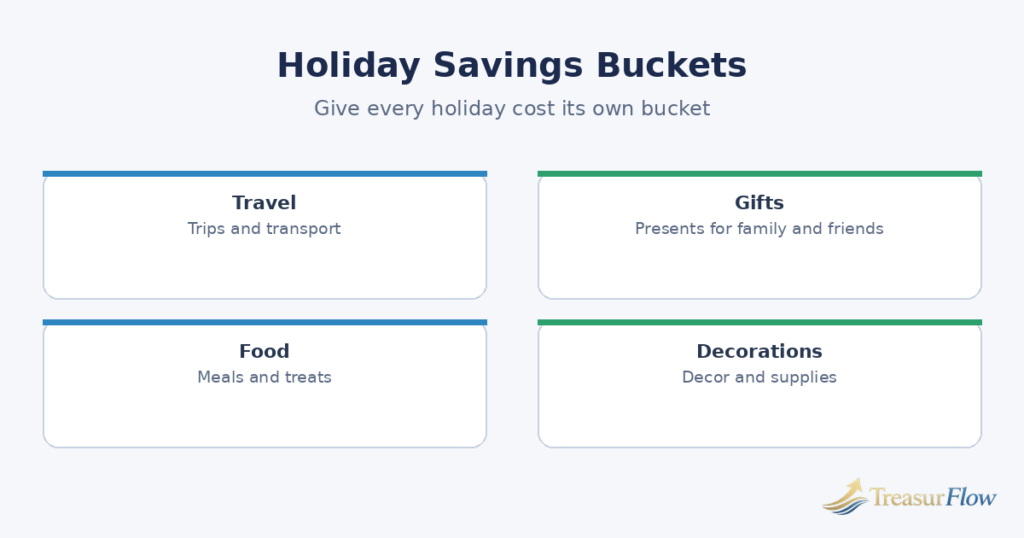
MoneyHelper explains the “jam jar” or savings pot method as dividing money into separate pots for different expenses so bills and goals stay organised. For holiday saving, that means your rent, food, bills, emergency money, and holiday fund should not all live in the same mental bucket.
Or maybe I should say it this way: if your holiday money sits beside your takeaway money, it will slowly become takeaway money.
Try this monthly setup:
| Monthly Income Step | What to Do |
|---|---|
| Payday arrives | Move holiday savings first |
| Bills are due | Keep bill money untouched |
| Weekly spending starts | Use what remains guilt-free |
| Extra money appears | Add 25–50% to the holiday fund |
| Emergency happens | Use emergency savings, not holiday cash |
I’ve seen conflicting advice — some savers prefer tracking every pound, while others do better with a simple “pay yourself first” method. My read is this: detailed tracking helps if you overspend in hidden categories, but automatic saving works better if you hate spreadsheets.
You don’t need a perfect system. You need one you will still use next month.
According to YouGov’s 2026 UK financial outlook, 51% of UK adults say they have a budget for 2026, and 34% of those budgeting are saving for something specific such as a house deposit, holiday, or car. That matters because holiday saving is not a weird luxury goal. It is one of the normal reasons people budget.
[IMAGE: Phone banking app showing separate pots labelled Bills, Emergency, and Holiday]
Where to Find Extra Money for Your Holiday
Do not start by cutting everything you enjoy.
That usually fails.
Start with spending that gives you the least value. MoneyHelper suggests looking at areas where you spend the most, checking whether you can reduce bills, tracking income and spending, and making sure you are getting any benefits you are eligible for.
Try these realistic cuts:
- Cancel one unused subscription and move that exact amount into your holiday fund.
- Replace two takeaway coffees per week with homemade coffee.
- Put cashback, refunds, or marketplace sales straight into the trip pot.
- Set a “no-spend weekday” once or twice a week.
- Reduce one flexible category, such as takeaways, clothes, or taxis.
- Use price alerts before booking flights or hotels.
- Travel outside peak dates if your schedule allows it.
My opinion, and some people will push back on this: do not book the deposit until you know how you will save the rest.
The deposit makes the holiday feel real. That is why people do it. But if the rest of the trip depends on future borrowing, the holiday has already become financial pressure.
Some people argue that booking early is smart because prices can rise. That is valid when you have stable income, a clear savings plan, and refundable terms. But if you are guessing how you will pay the balance, waiting is safer.
Nationwide’s 2026 consumer research found that 54% of surveyed customers were concerned about the rising cost of living, yet 41% still had leisure, longer holidays, shorter breaks, festivals, experiences, or wellness on their wish lists. People still want holidays. They just need better guardrails.
Avoid the Holiday Saving Mistakes That Cost You Later
The biggest mistake is saving for the trip but not saving for the return.
You need money for the week after the holiday too. Food still needs buying. Bills still arrive. Work clothes, school costs, petrol, and transport do not wait politely because you were away.
MoneyHelper says unexpected costs can damage a savings goal and recommends putting something aside for surprise expenses even while saving for a holiday.
What most guides skip is the “back-home buffer.”
Add this to your plan:
- Holiday emergency buffer: money for delays, lost items, medical excess, or transport changes.
- Return-home buffer: money for groceries, bills, and normal life after the trip.
- Booking buffer: money for card fees, luggage, city tax, deposits, or resort charges.
A Reddit user asking how to save for a vacation described a common problem: they could afford the initial deposit but did not know how to budget for the full trip. That is the real issue. The deposit is not the holiday. The full cost is the holiday.
So build the plan around the final balance.
Not the first payment.
Simple Holiday Saving Plan You Can Start This Week
Use this plan if you want a clear starting point.
Step 1: Pick the holiday type
Choose one:
- Local weekend break
- Family beach holiday
- City break
- Overseas trip
- Cruise
- Visiting relatives abroad
- Festival or event-based trip
Each one has different costs. A cruise may include food but add tips, excursions, transfers, and insurance. A city break may look cheap until food and transport stack up.
Step 2: Set a real number
Write down the total. Then add 10–15% as a buffer.
If the trip looks too expensive, adjust one thing:
- Go for fewer nights.
- Choose a cheaper month.
- Pick self-catering accommodation.
- Use public transport.
- Stay closer to home.
- Reduce paid activities.
Do not rely on “I’ll somehow manage.”
That sentence is expensive.
Step 3: Automate the money
Set a transfer for payday or the day after payday. The CFPB notes that recurring transfers can move a chosen amount from checking to savings weekly or monthly, helping people save without needing to remember each time.
If you are paid monthly, save monthly. If you are paid weekly, save weekly.
Match the rhythm of your income.
Step 4: Track progress visually
Use a banking pot, spreadsheet, printable tracker, or notes app. MoneyHelper says naming your goal and tracking progress can help motivation.
Name the pot something specific:
- “Spain August 2026”
- “Mum’s 60th Trip”
- “Alaska Cruise Fund”
- “Family Beach Week”
A named goal feels harder to raid.
Step 5: Review before booking
Before paying a deposit, ask:
- Can I afford the monthly savings amount?
- Is the payment refundable?
- Do I have travel insurance sorted?
- Have I included food, luggage, transfers, and activities?
- Will I still have money after I return?
If the answer is no, pause.
That pause may save you hundreds.
Voice Search Q&A
Q: What’s the best way to save money for holidays?
A: Set a full trip budget, open a separate holiday savings pot, and automate transfers every payday so the money is saved before daily spending begins.
Q: How do I save for a holiday on a low income?
A: Start with a smaller trip, save a realistic amount weekly, cut one low-value expense, and use a separate pot so the money does not mix with bills.
Q: Should I use a credit card to pay for my holiday?
A: Only if you can repay it in full. If you carry the balance, interest can make the holiday far more expensive than planned.
Q: Why does my holiday always cost more than expected?
A: Most people budget for flights and hotels but forget luggage, food, transfers, insurance, roaming, activities, tips, and money needed after returning home.
Q: When should I start saving for a holiday?
A: Start as soon as you choose the trip. Six to twelve months is ideal for bigger holidays because it lowers the monthly amount you need to save.
Sources & Research
This guide was researched using trusted financial education resources and consumer budgeting guidance. Recommendations on building a holiday savings fund, budgeting for travel, and automating savings are based on information published by the Consumer Financial Protection Bureau (CFPB) and MoneyHelper. Additional insights into UK budgeting habits and consumer spending trends were referenced from YouGov and Nationwide Building Society research. Community discussions on common holiday budgeting challenges were also reviewed from Reddit to better reflect real-world saving experiences.
Resources:
Reddit Personal Finance Discussions: https://www.reddit.com/r/personalfinance/
Consumer Financial Protection Bureau (CFPB): https://www.consumerfinance.gov/
MoneyHelper: https://www.moneyhelper.org.uk/
YouGov UK: https://yougov.co.uk/
Nationwide Building Society: https://www.nationwide.co.uk/
Final Takeaway
Saving for a holiday is not about being strict forever. It is about making the trip affordable before you go.
Set the real cost. Break it into monthly or weekly amounts. Move the money automatically. Keep it separate. Add a buffer.
Then enjoy the holiday without bringing home a financial hangover.

Muhammad Zakir is the founder of Treasurflow and the author of its personal finance guides. He researches consumer banking, credit, and personal loans, and every guide cites primary sources such as the CFPB, FDIC, FTC, and IRS. His content is educational and is not personalized financial advice.
2 thoughts on “How to Save Money for Holidays: 15 Easy Ways to Reach Your Goal”