

If your credit is nonexistent, thin, or damaged, the best secured credit cards of 2026 are the fastest legitimate on-ramp back into the system. You put down a refundable cash deposit — usually $200 to $500 — that deposit becomes your credit limit, and every on-time payment gets reported to the three major credit bureaus. Use the card the right way for 6 to 12 months, and most issuers will review your account for an upgrade to a regular unsecured card and hand your deposit back.
That is the whole game in one paragraph. The rest of this guide is about not wasting your money along the way: which card deserves your deposit, how much to put down, the exact monthly math that moves your score, and the timeline for getting your money back. Every number below is checked against issuer disclosures and consumer-finance sources as of October 2026.
Related Guides
- No Credit Check Credit Cards 2026: 7 Real Options — if even a secured card’s credit check worries you, start here
- How Long Does It Take to Build Credit From Scratch? — the full timeline, month by month
- Best Balance Transfer Credit Cards 2026 — where to move existing debt once your score recovers
- Best Cash Back Credit Cards 2026 — the unsecured rewards cards worth graduating to
Helpful Official Resources
- What is a secured credit card? — Ask CFPB (Consumer Financial Protection Bureau)
- What is a credit score? — Ask CFPB (Consumer Financial Protection Bureau)
- What’s in your FICO score (myFICO)
- What is a FICO score and why is it important? (Experian)
- Free credit reports (Federal Trade Commission, Consumer Advice)
- Credit reports and scores (USA.gov)
- Understanding and managing secured cards (Capital One Help Center)
How a Secured Card Turns Your Deposit Into a Credit Score
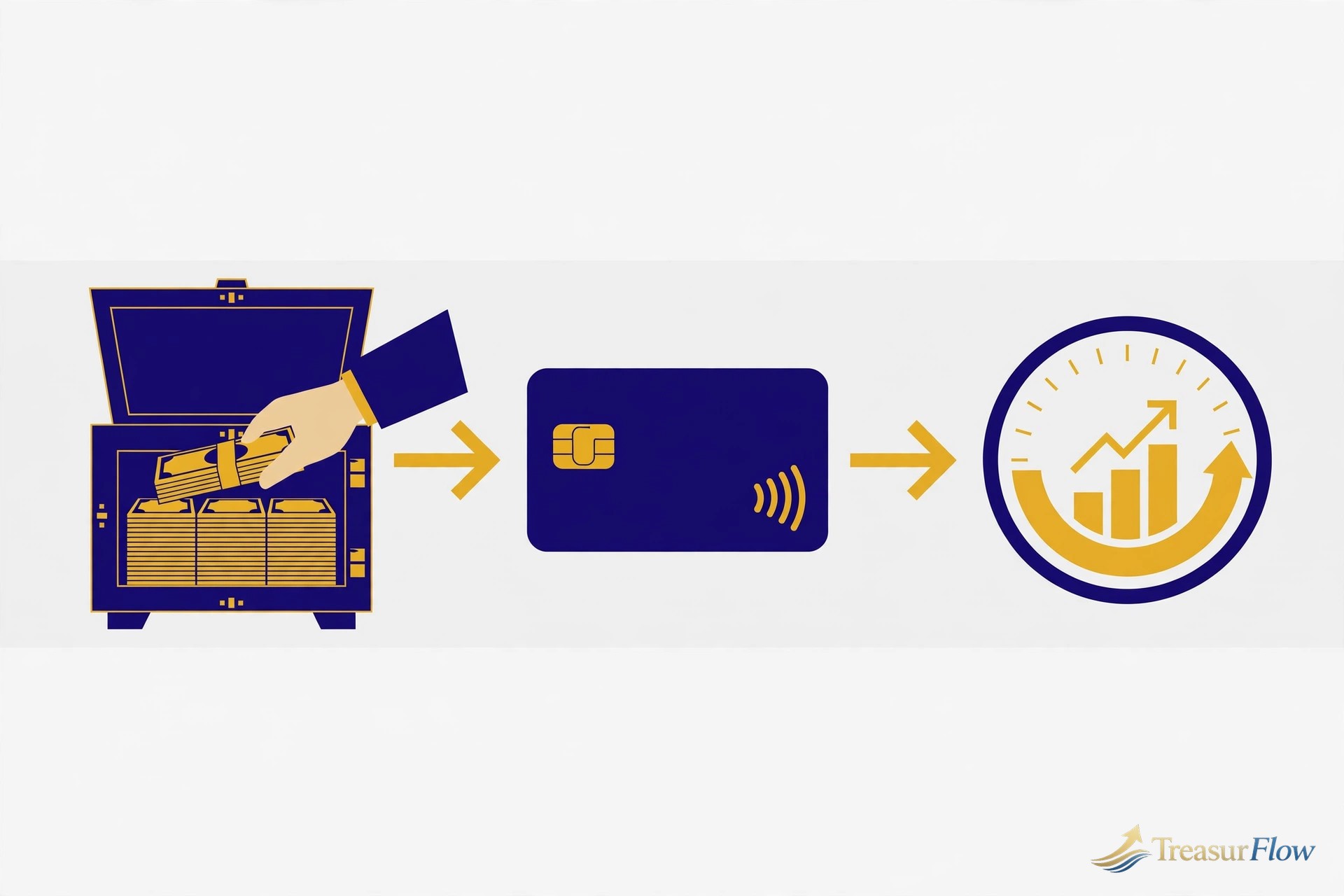
A secured credit card works exactly like a normal credit card, with one structural difference: you post a refundable cash deposit first, and the issuer holds it as collateral. The Consumer Financial Protection Bureau describes the standard setup this way — after approval, you deposit money into a separate account, the institution holds the deposit, and it extends you a credit line matching the deposit amount, then reports your card activity to the credit reporting companies so you build credit with use.
Two things trip up almost every first-timer, so let’s clear them up now:
Your deposit is not a payment. The deposit sits in a separate account as collateral. You still get a monthly statement and you still have to pay it — the deposit only covers the issuer if you default. Pay your bill like any other card.
Your deposit is not a fee. You get it back. Either the issuer “graduates” you to an unsecured card and refunds it, or you close the account in good standing with a zero balance and the deposit is returned (Capital One, for example, applies it to any remaining balance within 7–10 days of closure and mails the rest by check after two billing cycles).
The 12-month math that actually moves your score
Here’s why a secured card works so well, in numbers. FICO scores — the scores roughly 90% of top lenders use — are built from five factors, and the two biggest are the ones a secured card directly controls, per myFICO: payment history (35%) and amounts owed (30%). That’s 65% of your score shaped by two behaviors: pay on time, and keep balances small.
Say you put down a $300 deposit, so your credit limit is $300. You put a $25 streaming subscription and $20 of gas on the card each month — $45 total — and pay the statement in full. Your utilization ratio is:
$45 ÷ $300 = 15%
That 15% sits comfortably under the widely used 30% guideline (NerdWallet’s standing advice: try to use 30% or less of your available credit). Twelve on-time payments plus low utilization is precisely the pattern the scoring models reward — most guides report the first score movement within 1–3 months of this routine, with meaningful change over 6–12 months, and Experian notes that a FICO score generally requires an account at least six months old with recent activity.
And here’s the math that keeps you honest: secured card APRs run high — roughly 27% to 30% across the market. Carrying a $1,000 balance at 28% costs about $280 a year in interest alone. That single fact is why the rule is absolute: never carry a balance on a secured card. Pay in full, every month, and the APR becomes irrelevant.
How much should you deposit? A practical rule of thumb used across credit-building guides: enough to cover one to two months of small recurring purchases — typically $300 to $500. A bigger deposit doesn’t build credit faster; it just gives you a bigger usable limit. Don’t tie up rent money chasing a higher limit.
The 5 Best Secured Credit Cards of 2026, Compared
Every card below charges no annual fee except where flagged, reports to all three bureaus (Experian, Equifax, TransUnion), and has a real path to getting your deposit back. What differs is the deposit size, the perks, and how fast the issuer lets you graduate.
Quick snapshot:
| Card | Min. deposit | Annual fee | Standout feature |
|---|---|---|---|
| Discover it® Secured | $200 | $0 | Cash back + first-year match |
| Capital One Platinum Secured | $49* | $0 | Lowest deposit (*based on creditworthiness) |
| Capital One Quicksilver Secured | $200 | $0 | 1.5% flat cash back |
| OpenSky® Secured Visa® | $200 | $35 | No credit check |
| Secured Chime Visa® | None required | $0 | No deposit, no check, no interest |
1. Discover it® Secured Credit Card — Best Overall
This is the card most credit experts reach for first, and the numbers explain why. The minimum deposit is $200 (up to $2,500), the annual fee is $0, and it’s one of the only secured cards that pays real rewards: 2% cash back at gas stations and restaurants on up to $1,000 in combined purchases per quarter, plus 1% on everything else.
The math: spend $800 a quarter on gas and dining (inside the $1,000 cap) and you earn $16 a quarter — $64 a year. Then Discover’s signature welcome offer kicks in: it matches all the cash back you’ve earned at the end of your first year, dollar for dollar, with no minimum or maximum. That $64 becomes $128. No other secured card in this lineup doubles your rewards.
The graduation path: Discover has historically reviewed accounts for unsecured upgrades starting around month seven. As of late 2026, NerdWallet reports the automatic-review timeline is no longer fixed — but upgrades and deposit refunds remain available for accounts in good standing, and the card includes free FICO Score tracking so you can watch your progress.
The catch: the $200 minimum deposit is a genuine barrier if cash is tight, and approval isn’t guaranteed — Discover does check your credit. If $200 upfront is too much, card #2 below exists for exactly that reason. (Ongoing APR is 26.49% variable — irrelevant if you pay in full, painful if you don’t.)
2. Capital One Platinum Secured Credit Card — Best for the Lowest Deposit
If the deposit itself is the obstacle, this is your card. Depending on your creditworthiness, Capital One lets you open a $200+ credit line with a refundable deposit of just $49, $99, or $200. The $49 tier is the cheapest entry point from any major bank.
The math: qualify for the $49 deposit and you’re getting a $200 credit line for one-quarter of the cash outlay Discover requires. Run the same $45-a-month routine from the section above and your utilization is a healthy 22.5% — still under 30% — on less than fifty bucks of tied-up money.
The graduation path: after your first six months, Capital One considers you for a higher credit line. Note the fine print from Capital One’s own help center: the secured card can’t be upgraded to an unsecured card by request — Capital One reviews accounts periodically and notifies you by mail if you become eligible. Keep your contact info current.
The catch: no rewards program at all — this card builds credit and nothing else. The $0 annual fee and no foreign transaction fees soften that, but if you want cash back while rebuilding, look at #3.
3. Capital One Quicksilver Secured Cash Rewards Credit Card — Best for Earning While Rebuilding
The middle path between Discover’s rewards and the Platinum’s accessibility. You put down a $200 refundable deposit, pay a $0 annual fee, and earn 1.5% cash back on every purchase — plus 5% on hotels and rental cars booked through Capital One Travel.
The math: 1.5% is flat and brainless. Spend $400 a month on the card (paid in full, and only if your limit supports it — remember utilization), and that’s $6 a month, $72 a year, with zero effort and zero rotating categories to track. It won’t beat Discover’s matched 2% on dining and gas, but it beats it on everything else.
The graduation path: Capital One reviews accounts for graduation after six months of on-time payments.
The catch: the $200 deposit is fixed — there’s no $49 tier here — and Discover’s first-year match makes Discover the better rewards play in year one. Pick Quicksilver if you want simplicity over optimization.
4. OpenSky® Secured Visa® Credit Card — Best for No Credit Check
Some readers can’t afford a hard inquiry right now — or have been burned and want a guaranteed approval. OpenSky runs no credit check on applications. The minimum deposit is $200 (up to $3,000), and it reports to all three bureaus like the bank cards.
The math you need to see: the annual fee is $35. On a $200 credit line, that’s 17.5% of your entire limit consumed by fees in year one — before you’ve bought a single coffee. Deposit $500 instead and the fee is a more tolerable 7% of your line. Either way, run the fee against the alternatives before you apply.
The graduation path: this is OpenSky’s weak spot — there’s no defined automatic graduation program. You build credit here, then apply elsewhere when your score qualifies. Treat it as a 12-month bridge, not a home.
The catch: that $35 fee, every year, plus no rewards and no upgrade path. Only choose OpenSky if the no-credit-check feature is genuinely worth $35 a year to you.
5. Secured Chime Visa® Credit Card — Best No-Deposit Fintech Option
Chime takes a different approach: there’s no minimum deposit, no credit check, no annual fee, and no interest — you move money from your Chime checking account into the secured account and that sets your spending power. It reports to all three major bureaus.
The math: with no annual fee and no interest, the card costs literally $0 a year to hold. Every dollar you move in is spendable (unlike a traditional deposit that just sits as collateral), which makes it the most cash-flow-friendly option on this list.
The catch: you must have a Chime checking account — it’s a closed ecosystem, not a standalone card. And there’s no formal graduation to an unsecured Chime card; like OpenSky, it’s a bridge. But as bridges go, a free one beats a $35-a-year one.
Also worth a look
- BankAmericard® Secured — $300 minimum deposit, $0 annual fee, and notably high maximum deposit limits if you want a large line; periodic automatic graduation reviews. Best if you already bank with Bank of America.
- Current Build Card — $0 annual fee, no credit check, no interest, and a minimum deposit of just $1; reports to all three bureaus. A credible Chime alternative.
- The secured Self Visa® — builds through a credit-builder account starting around a $100 deposit; $0 the first year, then $25 annually. Decent if you also want forced savings, but the ongoing fee loses to Chime and Current.
One warning: you’ll still see the Citi® Secured Mastercard on older “best of” lists. Citi discontinued it for new applicants — any guide still recommending it in 2026 is running on stale data. That staleness is exactly why checking the current terms matters more than trusting a ranking.
No Credit Check vs. Big-Bank Cards: Pick Your Camp
The five cards above split into two philosophies, and the right one depends on your situation:
Choose a big-bank card (Discover, Capital One) if: you can handle the deposit and a credit inquiry, because you get the two things that matter most — a defined graduation path and (with Discover and Quicksilver) actual rewards. The bank wants to keep you; the upgrade pipeline is the product.
Choose a no-credit-check card (OpenSky, Chime, Current) if: your file is too damaged for approval, you’re avoiding inquiries, or you need the absolute lowest cash outlay. The trade-off is real: weaker or nonexistent graduation paths, and in OpenSky’s case, an annual fee.
One caution that applies to the whole no-credit-check corner of the market: the FTC warns that legitimate lenders never “guarantee” approval before you apply, especially if you have bad credit or no credit. A real no-credit-check card (like the ones above) is upfront about its fees and terms. A random website promising “guaranteed approval regardless of credit history” in exchange for an upfront “processing fee” is a scam pattern the FTC has prosecuted for decades — never pay a fee just to apply, and never hand your Social Security number to a company you haven’t vetted.
The 12-Month Graduation Playbook: From Deposit to Unsecured
The card is only half the strategy. Here’s the month-by-month routine that turns any of the five cards above into an unsecured upgrade and a refunded deposit:
Month 1 — Set the rails. Put one or two small recurring charges on the card (a subscription, a tank of gas). Turn on autopay for the full statement balance. Set a calendar reminder for your statement closing date — the balance reported on that date is what the bureaus see.
Months 2–3 — Stay boring. Pay in full, every month. Keep utilization under 30% — under 10% if you can manage it without contorting your budget. Check your free score monthly (Discover includes FICO Score tracking; most banks now show VantageScore in-app). Expect the first small movements around month three.
Months 4–6 — Resist the urge to add cards. Every new application is a hard inquiry and a younger average account age. One secured card, used perfectly, beats three cards used sloppily. If your issuer offers a higher credit line review at six months (Capital One does), take it — a higher limit with the same spending lowers your utilization automatically.
Months 7–9 — Watch for graduation. This is when issuers start reviewing accounts. Discover and Capital One both run periodic reviews; if yours upgrades you, the deposit comes back as a statement credit or check and the account history stays on your report — which is exactly what you want, since length of credit history is 15% of your FICO score. Never close the card just to get the deposit back faster if a graduation review is near.
Months 10–12 — Plan the exit. With a year of clean history, you’re a candidate for entry-level unsecured rewards cards — the cash back cards most people actually want. Once approved for one, you can close the secured card (deposit refunded, history preserved on your report for up to 10 years) or keep it open with a sock-drawer charge to age your file.
The whole playbook costs you nothing beyond the refundable deposit — provided you never carry a balance. At ~28% APR, one carried balance wipes out a year of rewards and then some.
Secured Card Questions, Answered
Is the security deposit on a secured credit card the same as a payment?
No. The deposit sits in a separate account as collateral and is never applied to your monthly bill — you still receive a statement and must pay it like any other credit card. The deposit is only touched if you default, and it’s refunded when you graduate to an unsecured card or close the account in good standing with a zero balance.
How long does it take to build credit with a secured card?
Most people see the first score movement within 1 to 3 months of consistent on-time payments and low balances, with meaningful improvement over 6 to 12 months. If you’re starting with no credit file at all, expect a FICO score to generate after about six months of account history with recent activity. Bigger deposits don’t speed this up — only time and on-time payments do.
How much should I deposit on a secured card?
Enough to cover one to two months of small recurring purchases — typically $300 to $500. That keeps your utilization naturally low without tying up money you need. A larger deposit only makes sense if you genuinely need a larger usable limit for planned spending you’ll pay off immediately.
Will applying for a secured card hurt my credit score?
Bank-issued secured cards (Discover, Capital One, Bank of America) usually require a hard credit inquiry, which can dip your score by a few points for a few months. No-credit-check cards (OpenSky, Chime, Current) skip the inquiry entirely. Either way, the inquiry’s small short-term cost is dwarfed by 12 months of positive payment history — which is 35% of your FICO score.
When do I get my security deposit back?
In two scenarios: your issuer graduates you to an unsecured card (the deposit is refunded as a statement credit or check, and the account stays open), or you close the account in good standing with a $0 balance. If you close with a balance still owed, the issuer applies the deposit to it first — and you’re responsible for anything left over. Timelines vary, but refunds typically process within two to three billing cycles.
Can I get a secured card without a Social Security number?
Some issuers accept an Individual Taxpayer Identification Number (ITIN) or alternative documentation instead of an SSN. It depends on the issuer, and you’ll still need to pass standard checks on identity, income, and ability to repay. If you’re new to the U.S. credit system, no-credit-check fintech cards tend to have the most flexible documentation requirements.
The Bottom Line
The best secured credit card of 2026 for most people is the Discover it® Secured — $200 refundable deposit, no annual fee, genuine cash back doubled in year one, and a real graduation path. If $200 upfront is too steep, the Capital One Platinum Secured gets you a $200 line for as little as $49 down. And if a credit check is a non-starter, the Secured Chime Visa® builds credit with no deposit, no check, and no fees at all.
Whichever you pick, the card is just the tool — the 12-month playbook above is the actual strategy. Pay in full, keep utilization under 30%, and let the calendar do the heavy lifting. A year from now, the deposit comes back and the score stays.
Card terms change. Before applying, confirm the current deposit, fee, and APR details on the issuer’s own site — the facts in this guide were verified against issuer disclosures and consumer-finance sources in October 2026.

Muhammad Zakir is the founder of Treasurflow and the author of its personal finance guides. He researches consumer banking, credit, and personal loans, and every guide cites primary sources such as the CFPB, FDIC, FTC, and IRS. His content is educational and is not personalized financial advice.
2 thoughts on “Best Secured Credit Cards 2026: 5 Cards That Turn a Deposit Into Real Credit”