
Whether you operate an independent trucking business, manage a commercial delivery fleet, or are simply evaluating your personal auto policy options, understanding primary liability insurance is critical to protecting your financial assets.
If an accident occurs tomorrow, which policy pays first?
What Happens If Your Car Insurance Coverage Limits Are Too Low?
This complete guide breaks down how primary liability coverage works, what is and isn’t covered, average costs across the US, and how primary insurance differs from secondary or umbrella policies.
If you drive occasionally but don’t own a car, standard primary policies may not apply to you. Read our complete guide on non-owner auto insurance options to stay protected behind the wheel. Drivers without a valid license face extra hurdles — our guide to car insurance without a license explains the available options.
Bottom Line Up Front (BLUF): What Is Primary Liability Insurance?
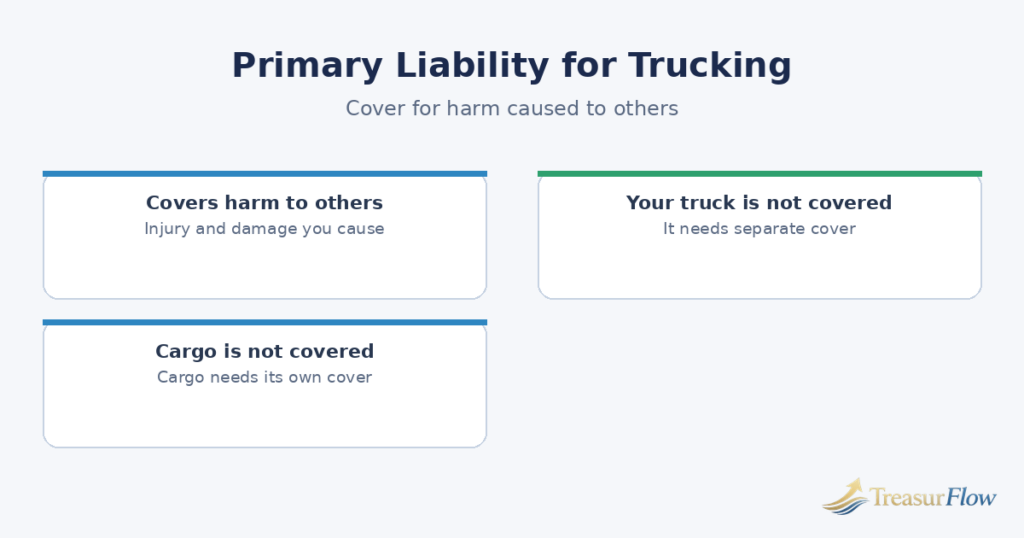
Primary liability insurance is the foundational policy layer that pays out first on a covered claim before any other insurance policy applies. In auto and commercial insurance, it covers Bodily Injury (BI) and Property Damage (PD) caused to third parties when you or your drivers are legally at fault. It does not pay for damage to your own vehicle or property.
┌─────────────────────────────────────────────────────────────────────────────────────────┐
│                             PRIMARY LIABILITY PAYOUT ORDER                              │
├─────────────────────────────────────────────────────────────────────────────────────────┤
│                                 [ ACCIDENT OCCURS ]                                     │
│                                          │                                              │
│                                          ▼                                              │
│                    ┌──────────────────────────────────────────┐                         │
│                    │     STEP 1: Primary Liability Pays       │                         │
│                    │   (First Line of Defense / Up to Limit)  │                         │
│                    └─────────────────────┬────────────────────┘                         │
│                                          │                                              │
│                 ┌────────────────────────┴────────────────────────┐                     │
│                 ▼                                                 ▼                     │
│    ┌─────────────────────────┐                       ┌─────────────────────────┐        │
│    │  Claim Under Limit:     │                       │  Claim Exceeds Limit:   │        │
│    │  Fully Paid by Primary  │                       │  Secondary/Excess Pays  │        │
│    │  (Claim Closed)         │                       │  (Or Personal Liability)│        │
│    └─────────────────────────┘                       └─────────────────────────┘        │
└─────────────────────────────────────────────────────────────────────────────────────────┘
Key Takeaways: Coverage Quick Reference
| Feature | Primary Liability Coverage |
| Payment Hierarchy | Pays first on a covered claim before secondary/umbrella policies trigger. |
| Core Components | Bodily Injury (BI) and Property Damage (PD) for third parties. |
| What It Protects | Other drivers, pedestrians, property owners, and your legal defense costs. |
| Major Exclusions | Damage to your own vehicle, your medical bills, intentional acts, cargo. |
| Commercial Standard | $750,000 to $1,000,000 CSL (Combined Single Limit, often required by FMCSA). |
| Personal Standard | 100/300/100 recommended (50/100/50 is often insufficient for major claims). |
How Primary Liability Coverage Works: BI vs. PD
Primary liability insurance consists of two distinct components designed to handle third-party losses:
1. Bodily Injury (BI) Liability
Bodily injury liability pays for medical treatments, emergency care, long-term rehabilitation, lost income, and pain and suffering incurred by people injured in an accident you cause.
- Example: If you run a red light and injure two passengers in another car, your primary BI liability pays their hospital bills up to your policy limit.
2. Property Damage (PD) Liability
Property damage liability pays for physical destruction caused to another party’s property.
- Example: Repairs to the other driver’s vehicle, damaged guardrails, utility poles, storefronts, or personal property inside their vehicle.
Primary Insurance vs. Secondary (Excess) Insurance
Understanding the operational order of insurance policies prevents catastrophic coverage gaps during a severe claim.
                       PRIMARY VS. SECONDARY INSURANCE HIERARCHY
┌───────────────────────────┬─────────────────────────────────┬─────────────────────────────────┐
│ Operational Feature       │ Primary Insurance               │ Secondary / Excess Insurance    │
├───────────────────────────┼─────────────────────────────────┼─────────────────────────────────┤
│ Order of Payout           │ Triggers immediately (Line 1)   │ Triggers ONLY after primary max │
│ Deductibles               │ Standard policy deductibles     │ Typically $0 deductible         │
│ Operational Obligation    │ Provides immediate legal defense│ Supplemental liability safety   │
│ Pricing Structure         │ Higher base premium             │ Lower cost per $1M of coverage  │
└───────────────────────────┴─────────────────────────────────┴─────────────────────────────────┘
Industry Note: In reinsurance networks, a primary insurance ceding company is the direct insurer that writes your policy and pays the initial claim, later ceding (transferring) high-end risk above certain limits to a reinsurance partner.
Real-World Example: A Multi-Car Claim Walkthrough
Imagine you operate a commercial delivery van in California. You carry a $1,000,000 Primary Commercial Auto Liability policy and a $1,000,000 Secondary Umbrella policy.
- The Accident: Your driver negligently collides with a luxury SUV, causing $1,250,000 in combined bodily injury and property damage.
- Primary Policy Activation: Your primary liability insurer handles the claim processing and pays out its full $1,000,000 limit.
- Secondary Policy Activation: Your secondary umbrella policy activates to cover the remaining $250,000.
- The Outcome: Your business assets remain protected, and you suffer zero personal financial loss beyond your initial deductible.
What Is NOT Covered Under Primary Liability Insurance?
A dangerous assumption made by policyholders is that liability insurance covers all losses in an accident. Primary liability never pays for your own losses.
- ❌ Your Vehicle Repairs: Requires Collision or Comprehensive coverage.
- ❌ Your Personal Injuries: Requires Personal Injury Protection (PIP) or Medical Payments (MedPay).
- ❌ Commercial Freight & Cargo: Requires Motor Truck Cargo insurance.
- ❌ General Business Premises Injuries: Requires Commercial General Liability (CGL), which covers slip-and-fall incidents on your property rather than vehicular accidents on public roads.
Coverage Tip: Remember, primary liability only pays for damages you cause to other people. If you want basic legal coverage without paying for full physical damage protection on your own vehicle, explore our breakdown of liability-only car insurance policies.
How Much Does Primary Liability Insurance Cost?
Insurance rates vary depending on whether you are insuring a personal vehicle, a small business automobile, or a commercial freight fleet.
                       AVERAGE COST BREAKDOWN (US MARKET ESTIMATES)
┌──────────────────────────────────────┬────────────────────────┬─────────────────────────────┐
│ Policy Type                          │ Average Monthly Cost   │ Typical Policy Limits       │
├──────────────────────────────────────┼────────────────────────┼─────────────────────────────┤
│ Personal Auto Liability              │ $75 – $180 / month     │ 50/100/50 or 100/300/100    │
│ Commercial Auto (Small Business)     │ $150 – $350 / month    │ $1,000,000 CSL              │
│ Commercial Trucking (Owner-Operator) │ $650 – $1,400 / month  │ $750,000 – $1,000,000 (DOT) │
└──────────────────────────────────────┴────────────────────────┴─────────────────────────────┘
Budgeting Tip: Having poor credit can significantly increase your monthly insurance premiums. If you are struggling with high rates, check out our guide on finding cheap car insurance with bad credit or explore options for very cheap car insurance with no deposit required.
Is $300 a Month Normal for Auto Insurance?
For standard personal car insurance, $300 per month is higher than the national average ($150–$200/month). However, $300/month is very normal—and often considered affordable—if:
- You carry commercial auto primary liability on a box truck or cargo van.
- You reside in high-cost states such as California, Florida, or Michigan.
- You operate a newly formed business entity without years of commercial driving history.
Frequently Asked Questions
What Happens If Someone Hits My Car and I Only Have Liability Insurance?
If the other driver is 100% at fault, their primary liability insurance pays for your vehicle repairs and medical costs. Your own primary liability policy pays $0 because you caused no damage. However, if the at-fault driver is uninsured, you will need Uninsured Motorist Coverage or collision coverage to fix your vehicle.
Is 50/100/50 good liability insurance?
A 50/100/50 policy provides $50,000 for bodily injury per person, $100,000 for bodily injury per accident, and $50,000 for property damage. While this meets legal requirements in many states, it is often insufficient during major multi-vehicle crashes. Medical bills and modern car repairs can easily exceed $100,000, leaving you personally liable for the difference. Upgrading to 100/300/100 or a $1M Combined Single Limit is strongly recommended.
Do I need an LLC to get primary general liability insurance?
No. Sole proprietors, independent contractors, and freelancers can purchase primary liability policies without an LLC. However, operating as an LLC creates a legal layer that shields your personal assets (like your house or personal bank accounts) if a court judgment exceeds your policy limits.
Next Steps: Secure Your Coverage Layer
Carrying adequate primary liability insurance is your single most critical protection against unexpected financial loss or business failure.
- Operating Commercial Vehicles? Ensure your policy satisfies both state insurance departments and federal FMCSA motor carrier requirements.
- Reviewing Personal Policies? Evaluate increasing your BI/PD limits from basic state minimums to 100/300/100 for a minor monthly premium difference.
🌐 Official Regulatory Sources & Citations
For official state mandates, federal trucking compliance guidelines, and legal insurance protections, consult the following government and industry resources:
- Federal Motor Carrier Safety Administration (FMCSA): Official Financial Responsibility & Minimum Commercial Liability Rules
- National Association of Insurance Commissioners (NAIC): Consumer Shopping Guide for Auto Insurance Limits & Coverage Types
- Insurance Information Institute (III): Understanding Bodily Injury & Property Damage Liability Limits
- U.S. Department of Transportation (USDOT): Commercial Motor Vehicle Safety & Interstate Commerce Regulations

Muhammad Zakir is the founder of Treasurflow and the author of its personal finance guides. He researches consumer banking, credit, and personal loans, and every guide cites primary sources such as the CFPB, FDIC, FTC, and IRS. His content is educational and is not personalized financial advice.
1 thought on “What Does Primary Liability Insurance Cover? Don’t Get Caught Underinsured”